
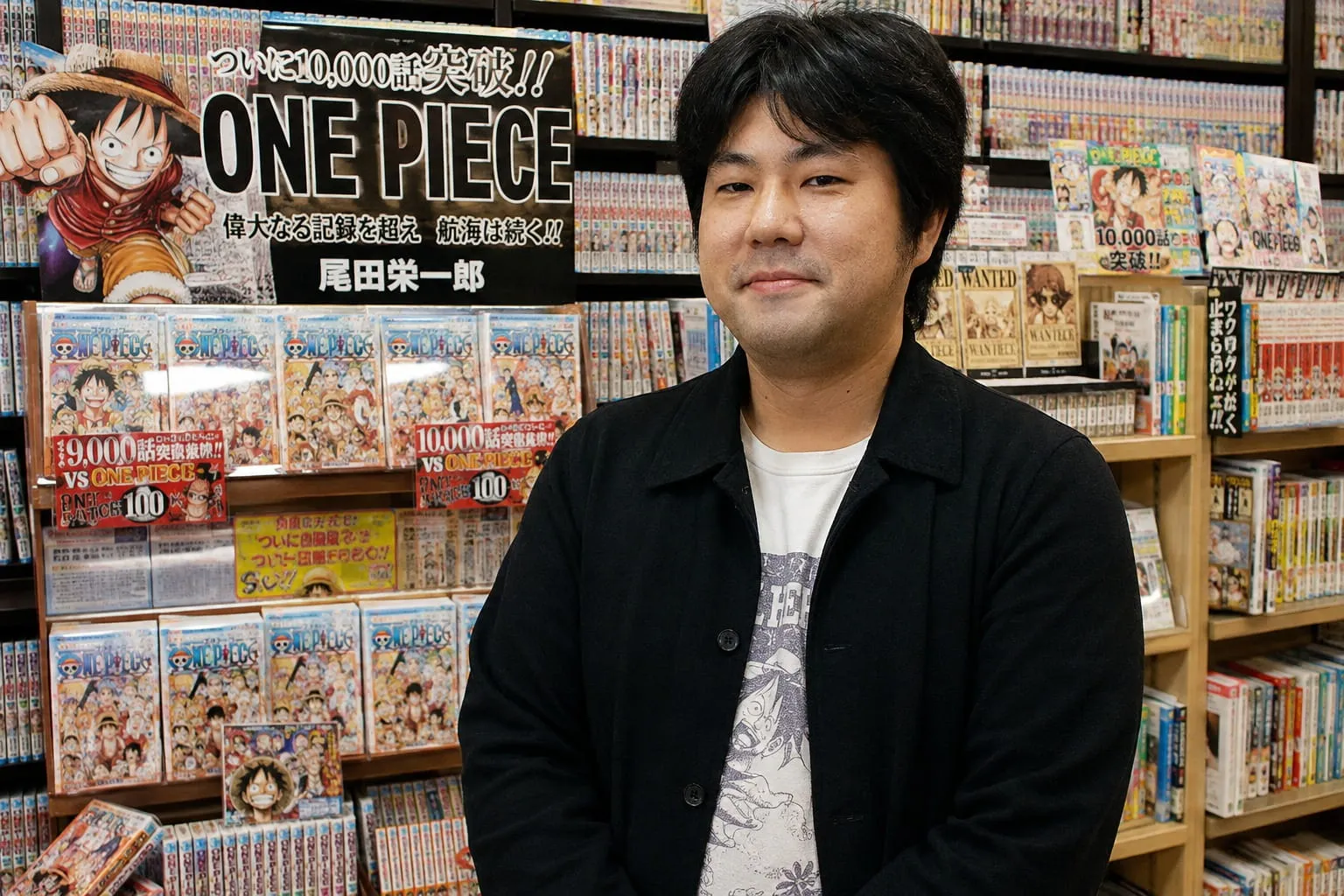
Eiichiro Oda’s net worth is estimated at $200 million, according to Celebrity Net Worth, making him the richest manga artist alive. Oda was born on January 1, 1975, in Kumamoto, Japan, and turned 51 in 2026. He built his fortune as the writer and illustrator of One Piece, the best-selling manga series in history, which he has drawn every week since 1997. Oda rarely appears in public these days, so there is no confirmed record of his current height. The only number on file comes from a profile he filled out at 17, long before One Piece existed.
Quick Facts
| Category | Details |
| Full Name | Eiichiro Oda |
| Born | January 1, 1975, Kumamoto, Japan |
| Age | 51 (as of 2026) |
| Occupation | Manga artist, illustrator, producer |
| Known For | Creator of One Piece |
| Net Worth | Estimated $200 million |
| Spouse | Chiaki Inaba (married 2004) |
| Children | Two |
| Nationality | Japanese |
Early Life and Biography
Oda grew up in Kumamoto with his father, Seiichiro Oda, who worked a regular office job and painted as a hobby, and his mother, Mieko Oda, a homemaker. He has one older sister, who married a French man named Cyrille in 2006. By his own account, Oda decided at age four that he wanted to draw manga for a living so he could avoid a conventional career.
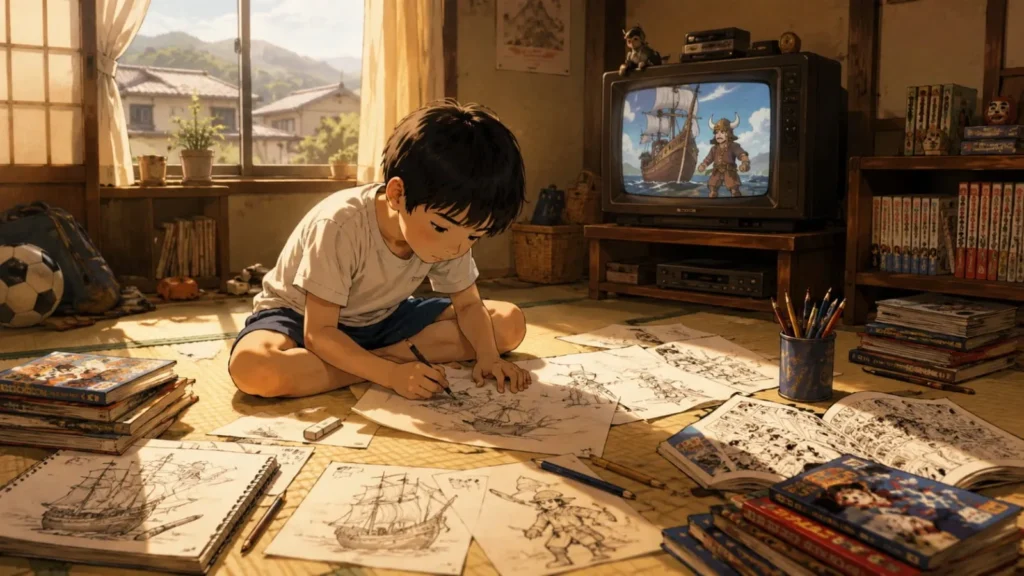
Two influences shaped that decision early on. The European animated series Vicky the Viking gave him a lasting interest in pirates, and Akira Toriyama’s Dragon Ball became the model he studied as he taught himself to draw and pace a story. Oda attended Tokai University’s Kumamoto campus while continuing to submit his own work to publishers.
One habit from those early years never went away. Since One Piece began running, Oda has answered reader questions directly inside each printed volume through a column called SBS. Fans have used it to settle small pieces of series trivia, including his own birthday, which he agreed to set as January 6 as an in-joke even though his official birth date remains January 1.
Career Timeline
Oda’s professional path moved fast once he started submitting work as a teenager:
- At 17, he got a job at Shueisha’s Weekly Shonen Jump after entering his one-shot “Wanted!”
- At 19, he won the Hop Step Award for new artists.
- In 1996 and 1997, he published two pirate-themed one-shots called “Romance Dawn,” introducing Monkey D. Luffy.
- In 1997, One Piece began weekly serialization in Weekly Shonen Jump.
- In 2013, he received the Grand Prize at the 41st Japan Cartoonists Association Award.
- In 2015, One Piece entered the Guinness World Records for the most copies published for the same comic book series by a single author.
- Across the 2010s and 2020s, One Piece grew into an anime, a string of theatrical films, and a live-action Netflix series, with Oda credited as an executive producer or creative consultant on most of them.
Sales figures have climbed steadily alongside his output. Early tallies from 2015 put worldwide circulation above 320 million copies; more recent counts place One Piece above 600 million tankōbon copies in print, which keeps it ranked as the best-selling comic series ever printed in volume form.
The story itself has grown just as steadily. One Piece now runs past 1,100 chapters, and Oda has said in past interviews that he still considers the plot only partway toward its ending. That pace matters for his income, since every new chapter adds to a print run and a licensing catalog that both keep expanding rather than winding down. The anime adaptation, produced by Toei Animation, has aired continuously since 1999 and now streams internationally through services including Crunchyroll and Netflix, which widened Oda’s royalty base well beyond Japan. One Piece Film: Red, released in 2022 with Oda credited on story and character design, became Japan’s highest-grossing domestic film of that year.
Net Worth Breakdown
Celebrity Net Worth lists Oda’s fortune at $200 million, and that figure is the one most widely cited across entertainment outlets. Other sites have published estimates ranging from roughly $180 million up to $230 million, and a few franchise-wide comparisons place it as high as $280 million when they fold in broader One Piece licensing value rather than Oda’s personal holdings alone.
The spread exists because Oda, like most Japanese public figures, does not disclose personal earnings, and Shueisha does not publish per-creator royalty data. Every figure in circulation is a third-party estimate built from sales volume, licensing deals, and reported income, not a confirmed number from Oda or his publisher.
Manga royalty structures in Japan typically pay the creator a percentage of the cover price on every tankōbon sold, on top of a separate page rate for magazine serialization. With One Piece’s volumes routinely opening at print runs in the millions in Japan alone, even a modest per-copy rate compounds into a substantial base income before anime, film, and merchandise royalties are added on top. That structure, more than any single windfall, explains why estimates of his wealth keep climbing year over year alongside the manga’s sales totals.
Income Sources
Manga royalties are the base of Oda’s income. As the sole writer and artist of One Piece, he earns from every tankōbon volume sold, plus a share of Weekly Shonen Jump’s chapter revenue. The Japanese variety show Baka Furi estimated his annual income at around 3.1 billion yen, or roughly $26 million, after factoring in royalties, merchandise, and international licensing on top of core manga sales.
Licensing accounts for a large share beyond the manga itself. One Piece merchandise, video games, theme park tie-ins, and the long-running anime all generate royalty payments back to Oda as the franchise’s creator. He has also taken paid production roles, working as an executive producer and character designer on multiple One Piece films and on Netflix’s live-action adaptation with Tomorrow Studios.
Outside the core franchise, Oda designed a luxury lighter and pen collection called the Sleeping Mermaid Collection with French maker S.T. Dupont, a project separate from One Piece that still added to his income. He has said in interviews that his drawing has earned him more money than he expected, and that he has spent some of it on unusual home additions, including a shark-themed bathroom and a dragon-shaped bathtub.
Video games add another steady stream. One Piece has been adapted into dozens of titles over the years, from fighting games to the long-running Pirate Warriors series published with Bandai Namco, each carrying its own licensing arrangement back to the franchise’s rights holders. Toy lines, apparel, and theme park attractions in Japan round out a merchandise business that analysts have ranked among the highest-grossing media franchises worldwide, separate from Oda’s core manga royalties but still tied to his creative ownership of the property.
Family
Oda met his future wife, Chiaki Inaba, in December 2002 at a Jump Festa event, where she was performing as the character Nami in a One Piece stage show. They married on November 7, 2004, and have two children together. Inaba had her own career as an actress and gravure model in Japan before the two married, and the two have kept most details about their children out of public reporting.

Friends have called Oda “Odacchi” since he was young, and the nickname stuck well into his career, showing up regularly in the SBS columns where he talks directly with readers. That informal, reader-facing side of his personality sits alongside the more private family man described by people who have worked with him, a contrast that comes up often in profiles of his life outside the studio.
Family has also shaped how Oda uses his wealth. After a major earthquake hit Kumamoto in 2016, he donated more than 800 million yen, about $5.5 million at the time, toward rebuilding his hometown. Part of that donation funded a series of One Piece character statues placed around the prefecture, each paired with information about the local area and the damage it suffered.
Physical Stats
Oda’s current height has never been independently confirmed. The one figure attached to his name traces back to an author profile he submitted at 17 for an early published work, and that number predates his adult life by decades. Fan reference sites describe him only as an average-height Japanese man with no distinguishing features in the rare photos that exist.
That scarcity is by design. Oda has kept a low public profile for years, and there has reportedly been no new photograph of his current appearance in close to a decade. He was born under the zodiac sign Capricorn, and colleagues and interviewers who have met him describe someone who prefers plain, casual clothing over any kind of public image management.

Interviews with Oda over the years describe a demanding routine built almost entirely around the manga: early starts, long stretches at the drawing table, and little time set aside for anything else during a serialization week. That work rate is consistent with a body of work that has now run for close to three decades without a break long enough to threaten the weekly schedule, and it lines up with why so much of his public identity is built on the page rather than on public appearances.