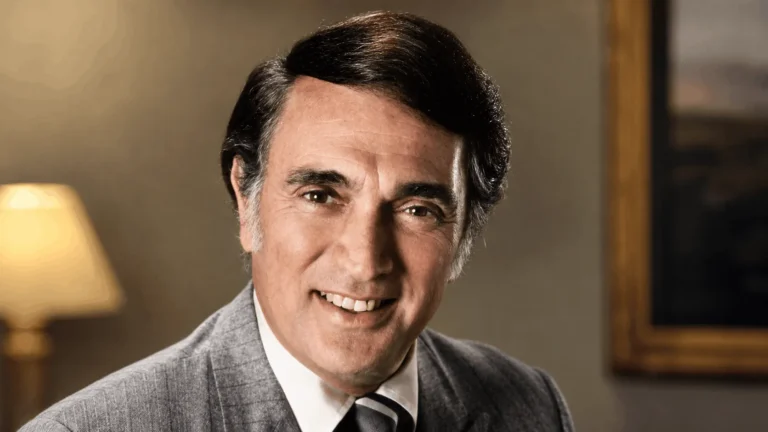


Danny DeVito’s net worth is estimated at $80 million as of 2026, according to Celebrity Net Worth. He built that fortune over more than five decades, first as a stage actor, then as a sitcom star on “Taxi,” and later as a film director and producer through his own company, Jersey Films. Today his income comes from a mix of acting salaries, directing fees, television residuals, and production profits, not from any single paycheck.
Danny DeVito Net Worth at a Glance
| Field | Detail |
| Real Name | Daniel Michael DeVito Jr. |
| Net Worth | $80 million (estimated) |
| Born | November 17, 1944, in Neptune, New Jersey |
| Age | 81 |
| Profession | Actor, comedian, director, producer |
| Primary Income Source | Acting and directing fees, TV residuals, and production profits through Jersey Films |
| Spouse | Rhea Perlman, married in 1982, separated since 2017, never divorced |
Early Life and Background
DeVito was born on November 17, 1944, in Neptune Township, New Jersey, and grew up in nearby Asbury Park. His father ran a string of small businesses, including a dry cleaner and a luncheonette, and DeVito has said that working-class upbringing shaped his sense of humor. He trained at the American Academy of Dramatic Arts in New York, graduating in 1966, and spent his first years on stage rather than in film or television.
He got his first film credit in “Dreams of Glass” (1970) and later reprised his off-Broadway role of Martini in “One Flew Over the Cuckoo’s Nest” (1975). Neither role made him a household name on its own. DeVito has described the industry’s early grind bluntly, once saying, “This business is fun. I love it. It’s the greatest business in the world,” a line that captures how long he stuck with acting before it paid off.

DeVito’s height, listed at 4 feet 10 inches, comes from Fairbank’s disease, also known as multiple epiphyseal dysplasia, a genetic condition that affects bone growth. He has spoken about it publicly rather than avoiding the subject, and it became part of how casting directors and audiences came to recognize him early in his career.
On the personal side, DeVito met Rhea Perlman in 1971 and married her in January 1982, the same year “Cheers” launched her own career. The couple had three children, Lucy, Grace, and Jacob, and worked together on and off screen for decades, including as co-founders of Jersey Films. They separated in 2012, reconciled the following year, then separated again for good in March 2017. They have never filed for divorce and still spend time together as a family, which matters for a net worth page since none of their shared property from the marriage has gone through a divorce settlement.
Career and Income Breakdown
Breaking Through on Taxi
DeVito’s real financial turning point came in 1978, when he was cast as dispatcher Louie De Palma on the NBC sitcom “Taxi.” The role ran through 1983 and earned him both an Emmy and a Golden Globe. It also turned him into a recognizable name for the first time, which opened the door to steady film work through the 1980s, including “Terms of Endearment” (1983), “Romancing the Stone” (1984), and “Twins” (1988) alongside Arnold Schwarzenegger.
Building Wealth Behind the Camera With Jersey Films
Most net worth pages stop at DeVito’s acting credits, but a large share of his income actually comes from producing. He co-founded Jersey Films with Michael Shamberg in the early 1990s, and the company went on to produce “Pulp Fiction,” “Get Shorty,” “Man on the Moon,” and “Garden State.” Producer credits pay differently than acting roles. They typically include backend profit points tied to a film’s box office and licensing performance, which is part of why DeVito’s fortune has held up even in years without a major acting role.
He also directed dark comedies including “Throw Momma from the Train” (1987), “The War of the Roses” (1989), and “Matilda” (1996), the last of which he also starred in alongside his then-wife, Rhea Perlman. Directing fees on studio films of that scale generally run into the high six or low seven figures, on top of any producing points.
Villain Roles and Voice Work
DeVito’s turn as the Penguin in Tim Burton’s “Batman Returns” (1992) is one of his highest-profile roles, and big-budget studio villain roles like that typically pay a flat upfront salary well above what a TV episode pays, plus a smaller cut if the film performs well internationally. He took on similar work throughout the 1990s and 2000s in “Mars Attacks!” (1996), “L.A. Confidential” (1997), and “Man on the Moon” (1999), the last of which he also produced through Jersey Films.
Voice acting became another steady stream once his profile grew large enough to headline animated projects. He voiced Phil in “Hercules” (1997), a supporting role in “Space Jam” (1996), and the title character in “The Lorax” (2012). These jobs pay a flat fee rather than box office points, which makes them a lower-risk, lower-ceiling addition to his income compared with directing or producing.
A Second Paycheck From It’s Always Sunny in Philadelphia
DeVito joined “It’s Always Sunny in Philadelphia” in its second season in 2006, playing Frank Reynolds, and has stayed with the show since. Long-running cable comedies like this one pay cast members through a combination of per-episode salary and, for established stars, a cut of syndication and streaming revenue once a show passes a certain episode count. “Sunny” cleared that threshold years ago, which means DeVito’s paycheck from the show now includes recurring residual income on top of his episode fee.

How Danny DeVito’s Net Worth Compares to His Co-Stars
DeVito’s $80 million puts him well ahead of most of his “It’s Always Sunny in Philadelphia” castmates, according to Celebrity Net Worth estimates. Charlie Day, who co-created the show, is estimated at $30 million, and Glenn Howerton is estimated at $25 million. Rob McElhenney and Kaitlin Olson are listed with a combined household net worth of $50 million.
The gap makes sense once you factor in DeVito’s five decades of additional film, directing, and producing income before “Sunny” even started. His younger castmates built their wealth almost entirely within one show’s run, while DeVito had already banked decades of film paychecks and Jersey Films profits by the time he joined the cast.
The comparison also depends on how each figure is calculated. McElhenney and Olson’s $50 million is reported as a single household number covering both spouses, not two separate fortunes, so it is not a direct apples-to-apples match against DeVito’s individually estimated total. McElhenney has also diversified outside acting through his stake in Wrexham AFC, the Welsh football club he co-owns with Ryan Reynolds, which functions more like an outside investment than entertainment income and could shift his numbers independently of anything that happens on “Sunny.”
Where Danny DeVito’s Money Comes From
DeVito’s income today comes from several separate streams rather than one job. He earns residuals from “It’s Always Sunny in Philadelphia” and syndicated reruns of “Taxi.” He also collects director and producer profit points on Jersey Films titles that continue to generate licensing revenue.
Beyond entertainment paychecks, DeVito signed on in 2022 as the first celebrity partner for the sandwich chain Jersey Mike’s, a paid endorsement deal tied to his New Jersey roots. Parade has estimated the arrangement pays in the low hundreds of thousands of dollars a year, in line with typical rates for a recurring national commercial campaign. He continues to take select film and voice roles as well, including animated work like “The Lorax” (2012), which pay flat fees rather than residuals.
Notable Assets and Real Estate
DeVito and Rhea Perlman bought a beachfront home in Malibu’s Point Dume neighborhood in 1989 for $2.8 million. That property is now worth an estimated $11.2 million, and property tax records put its annual tax bill at roughly $90,000, according to Wealthy Gorilla. The couple still owns the home despite their separation, since it was purchased together and no divorce settlement has divided it.
They also owned a 14,579-square-foot Beverly Hills estate, purchased in 1994, which they sold in April 2015 for $24 million after an earlier off-market listing above $30 million. In 2022, the pair listed a smaller property in the Mt. Washington area of Los Angeles for $1.55 million.

DeVito has also put money toward causes tied to his home state. In 2023, he donated $500,000 to the Hackensack Meridian Jersey Shore University Medical Center during a visit to the Jersey Shore area where he grew up.
Real estate and one-off gifts like this do not move the needle on a $80 million fortune the way a new film deal or renewed TV contract does, but they show how DeVito has managed money built over a long career rather than a single windfall.